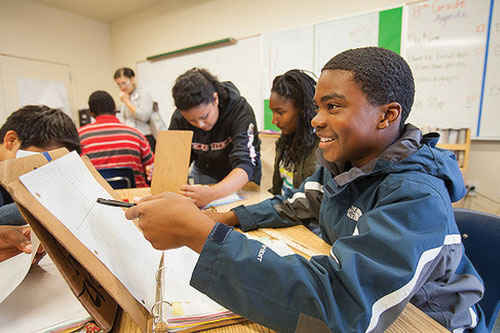
The Aim High program goes beyond typical summer school to insure that the population of youth most in need of summer programming will experience optimal learning and strong relationships. The John W. Gardner CenterThe study took a year and a half to complete. Researchers observed classrooms, conducted both surveys and interviews, and held focus groups with staff, students and parents. They produced a comprehensive collection of data and identified the following strengths of Aim High’s program:
- Intentional Program Design
- Low student-to-teacher ratio
- Excellent hiring and training practices
- High rates of student engagement, attendance, and retention
- Positive Program and Culture Climate
- Emotionally safe and supportive learning environment
- Positive peer relationships
- Strong student-teacher relationships
- Engaging Curriculum and Pedagogy
- Improved skills in reading, writing, math, and science
- Heightened social-emotional learning, access to college and career awareness
- Greater confidence
- Building Educational Leaders
- Embedded professional development and expanded knowledge of teaching methodology
- Informed beliefs about teaching and learning and importance of student-teacher relationships to student learning
 Luckily, in 2014 and 2015 when the Gardner Center’s implementation study was taking place, Aim High leaders were busy writing Vision 2020, the organization’s strategic plan. “If we had a question, we had a world-class team of education experts to consult,” says Alexis Bayley, Aim High Organizational Learning Specialist, who helped coordinate the study. “We were able to take the latest research in teaching learning, and summer and apply it to Aim High’s programming.”
“The research dovetailed well with our planning,” added Foulke, “resulting in a much stronger strategic plan.”
“Ultimately, the study resulted in better programing for students and better professional development for staff,” says Bayley. “We have a lot knowledge to share with our field.”
Aim High will share that knowledge with the field. On February 3, 2017, they will host Data to Action, a conference discussing the Gardner Center’s findings with donors, foundations, district partners, and other like-minded organizations.
Luckily, in 2014 and 2015 when the Gardner Center’s implementation study was taking place, Aim High leaders were busy writing Vision 2020, the organization’s strategic plan. “If we had a question, we had a world-class team of education experts to consult,” says Alexis Bayley, Aim High Organizational Learning Specialist, who helped coordinate the study. “We were able to take the latest research in teaching learning, and summer and apply it to Aim High’s programming.”
“The research dovetailed well with our planning,” added Foulke, “resulting in a much stronger strategic plan.”
“Ultimately, the study resulted in better programing for students and better professional development for staff,” says Bayley. “We have a lot knowledge to share with our field.”
Aim High will share that knowledge with the field. On February 3, 2017, they will host Data to Action, a conference discussing the Gardner Center’s findings with donors, foundations, district partners, and other like-minded organizations.